About
Gabriele Zoppoli — physician scientist at the University of Genoa, and, after hours, keeper of a 380+ accession cloud-forest collection.
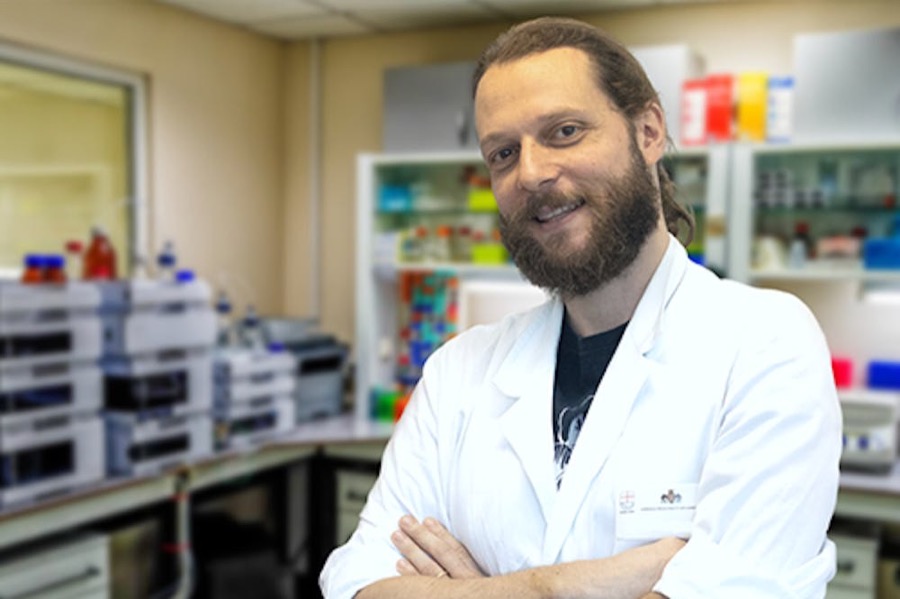
I’m Gabriele Zoppoli — a clinician-scientist in oncology and hematology at the University of Genoa, and, for as many hours as the rest of life will spare, a keeper of highland carnivorous plants, miniature orchids, and grey Tillandsia. The collection documented on this site has grown one accession at a time out of the quiet thrill of watching species that should be impossible to keep alive, still be alive the next morning.
The systematic side of all of this — the spreadsheet, the phylogenetic ordering, the open-source control loop — is almost certainly a habit from the lab. Applied to a living organism that is stubbornly not an experiment, the same reflex becomes something gentler: attention, patience, and a commitment to not losing what you’ve been lucky enough to receive.
The day job
Associate Professor of Internal Medicine at the University of Genoa and Molecular Tumor Board coordinator at IRCCS Ospedale Policlinico San Martino, with earlier stints at the NIH/NCI in Bethesda and at Institut Jules Bordet in Brussels. Current research is in liquid biopsy — cell-free DNA and single-molecule sequencing — for early diagnosis and longitudinal monitoring of breast cancer. The same taste for clean data and documented methods ends up in both the lab and the terrarium. Papers and grants live at ORCID, Google Scholar, and the UniGe directory.
How it started
It began with a single Dionaea muscipula on a windowsill. Then Nepenthes — plants that spent the first year convinced they would die, before deciding not to. Then Heliamphora, Dracula, miniature Dendrobium: species I’d only ever seen in books, sent by small growers across Europe who still pack their plants by hand. A few years in, it was clear the ad-hoc windowsill arrangement was the bottleneck, not the plants themselves — and the highland cabinet came out of that mismatch. Three years later the census is over 380 acquisitions across 89 genera, about 280 still alive.
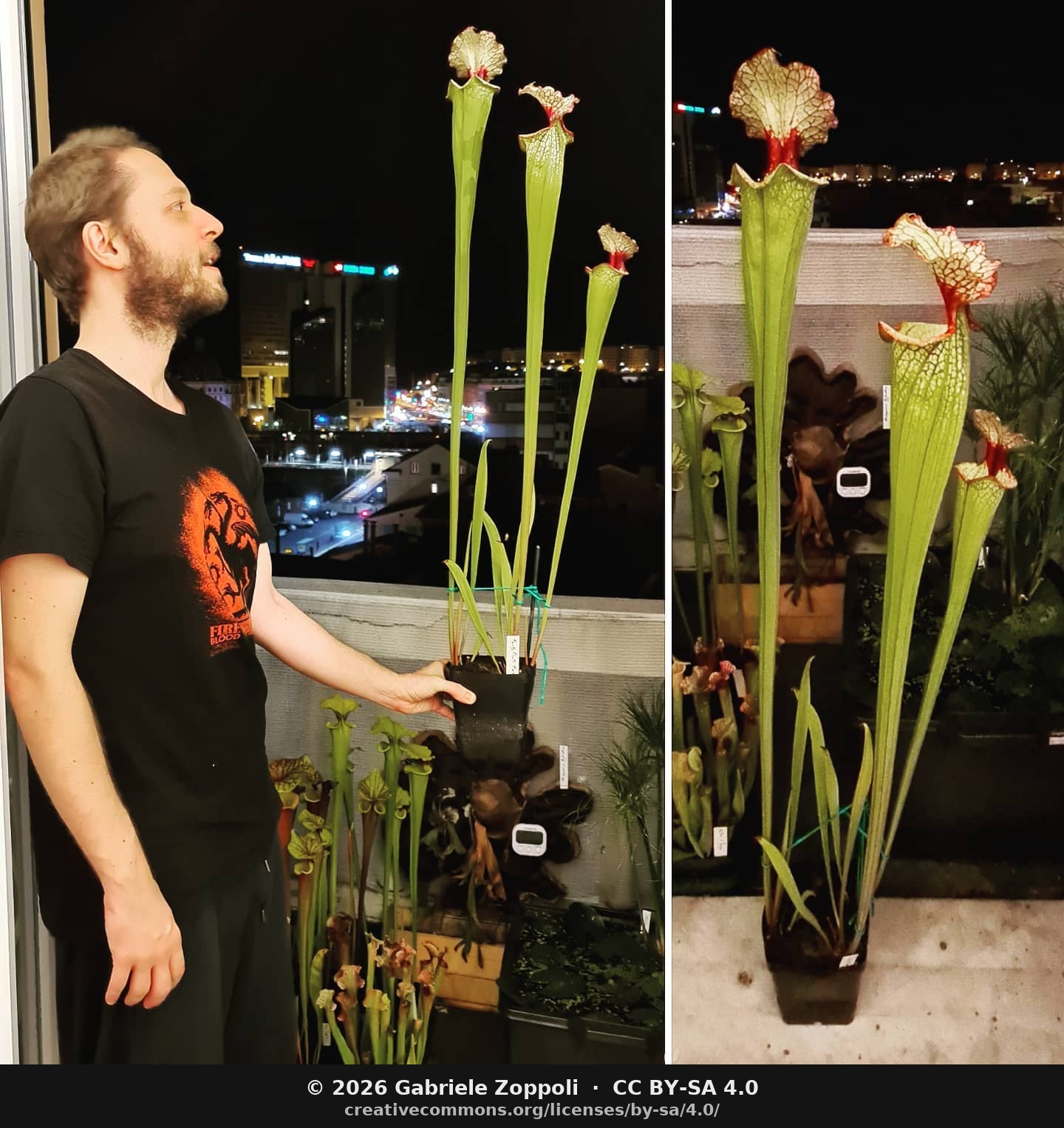
The hands behind the glass
The collection is mine on paper but two-handed in practice. My mother-in-law covers mist cycles and hand-watering when I’m at the hospital, lends her name to orders from vendors who only ship to one country, and is responsible for roughly half of the plants still alive three years in.
None of this would be sustainable without the European carnivorous-plant and orchid community: Andreas Wistuba for Nepenthes and Heliamphora; Vincenzo Castellaneta at Un Angolo di Deserto for Pinguicula; Giulio Celandroni in Pisa for orchids; Lieselotte Hromadnik in Kritzendorf, who still mails Tillandsia typed up on paper; and many other small growers whose names fill the acquisition records.
Elsewhere
- Emailgabriele.zoppoli@unige.it
- RSSNew species and build logs
- Press & re-useBios, hero photos, CC BY-SA 4.0
- ORCID0000-0002-1619-1708
- Google ScholarCitation record
- GitHubTerrarium, dendrogram, site
- LinkedInProfessional
- Instagram@zoppolig
For plant trades, corrections, collaborations, or a simple hello — email is best.