First bloom: Utricularia quelchii, three years in
A tepui bladderwort I've been growing since 2023 finally flowers, and I only notice by accident while checking the Sophronitis above it.
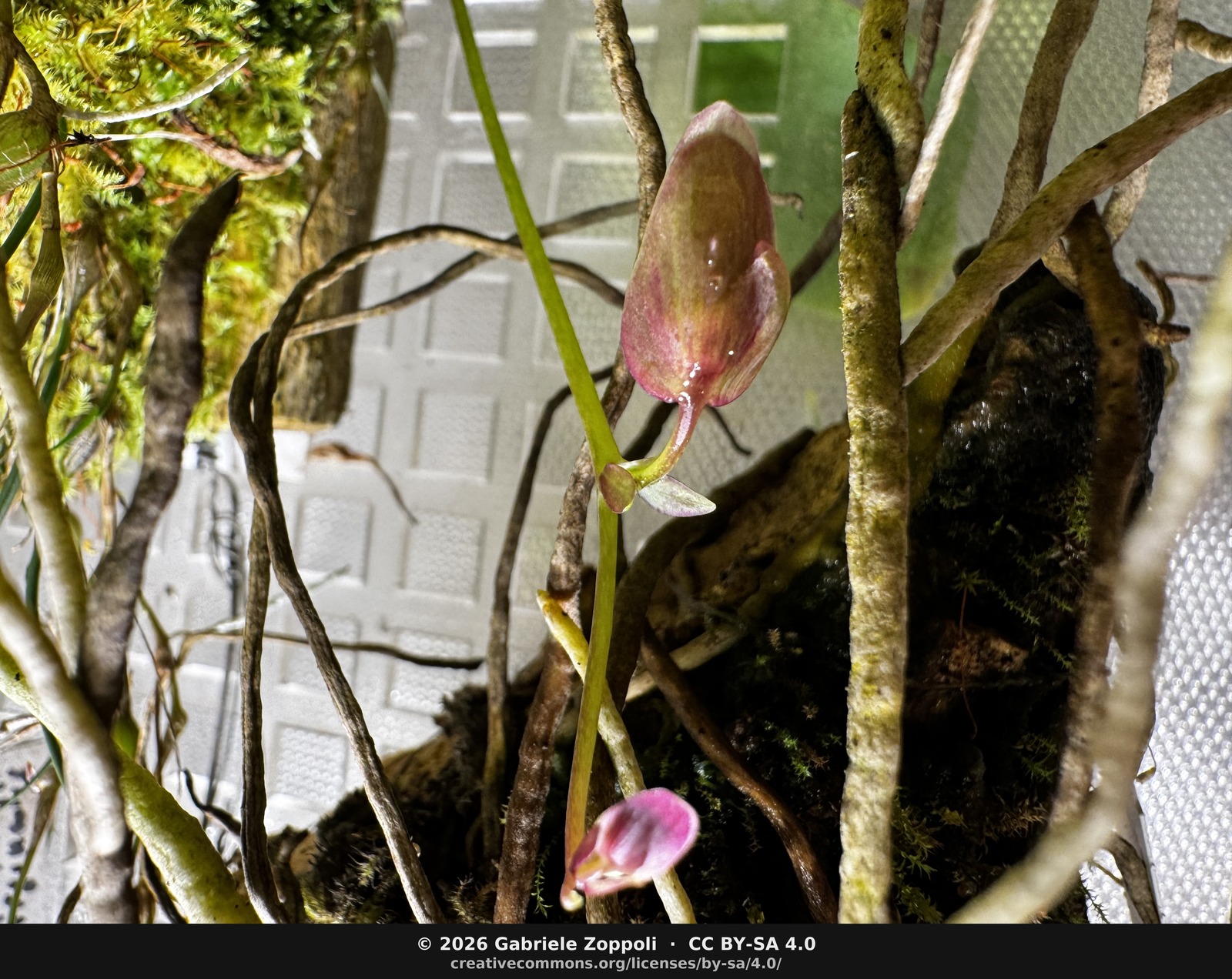
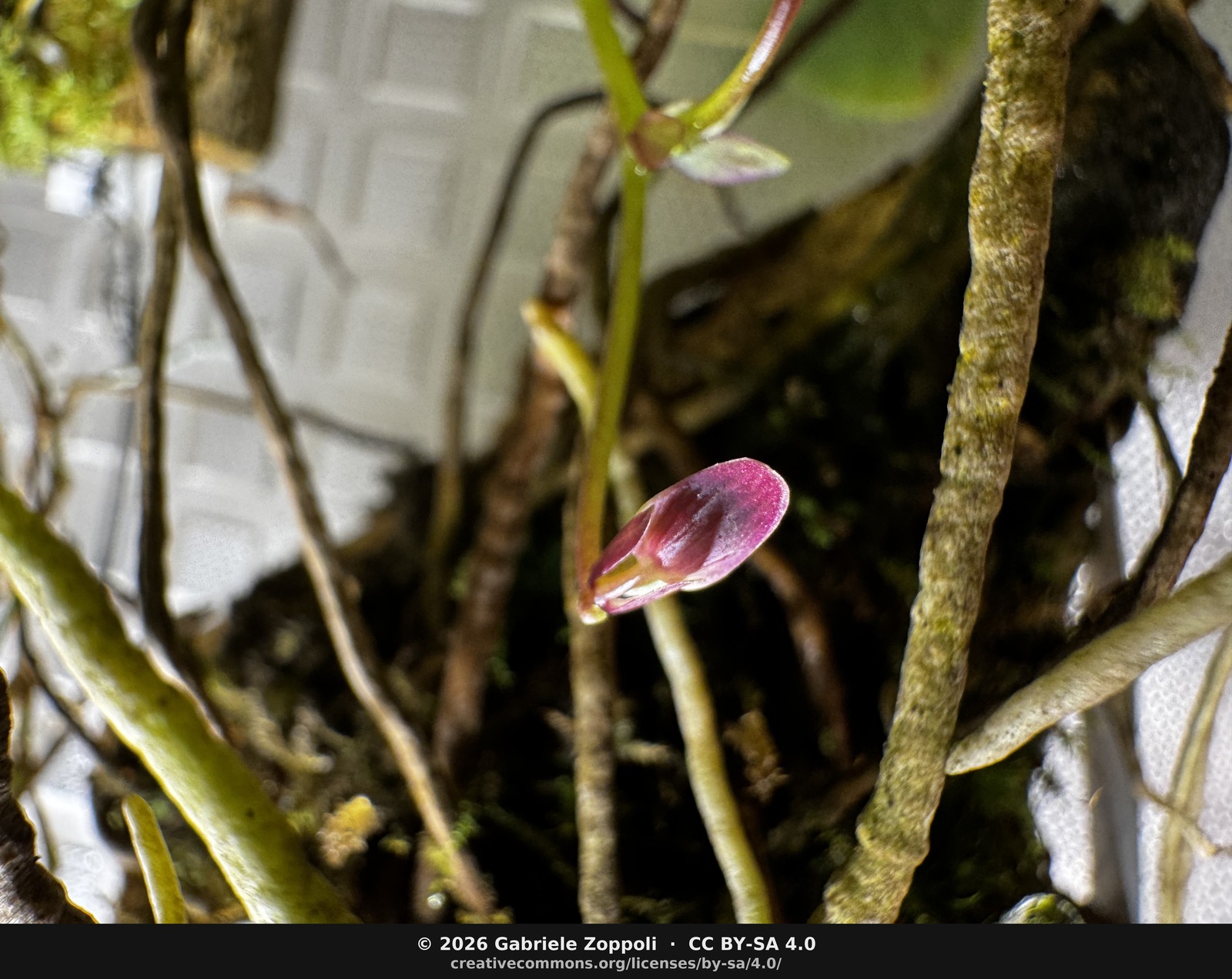
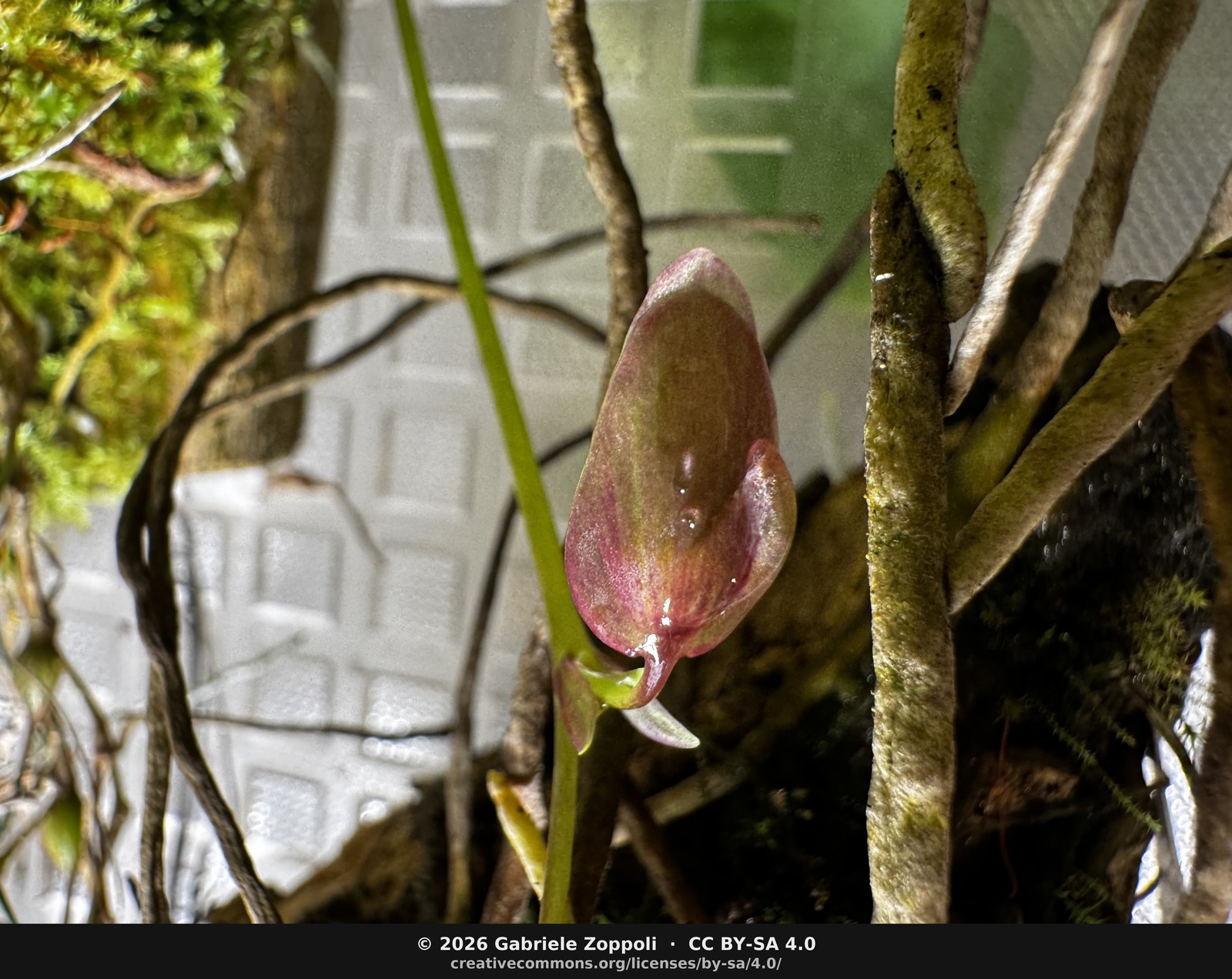
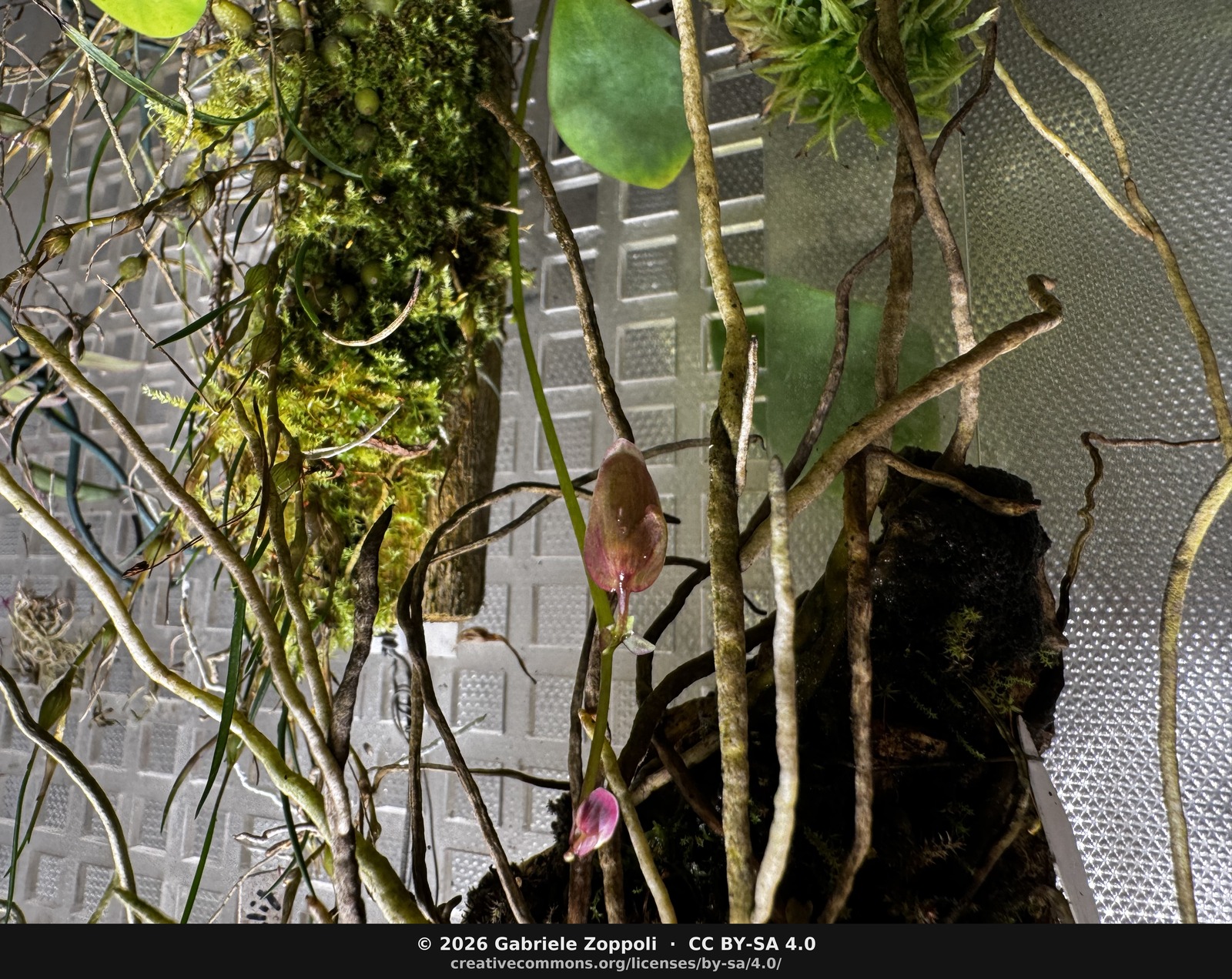
I wasn’t looking for it. Last week I was leaning into the highland cabinet to check on my Sophronitis coccinea hanging above, and through its roots I caught a thin red peduncle climbing out of the pot underneath. Utricularia quelchii. Three years in cultivation, steadily adding leaves and nothing else — until, suddenly, at least two buds, red-purple, the stem erect in that reniformis family posture but smaller and more hesitant.
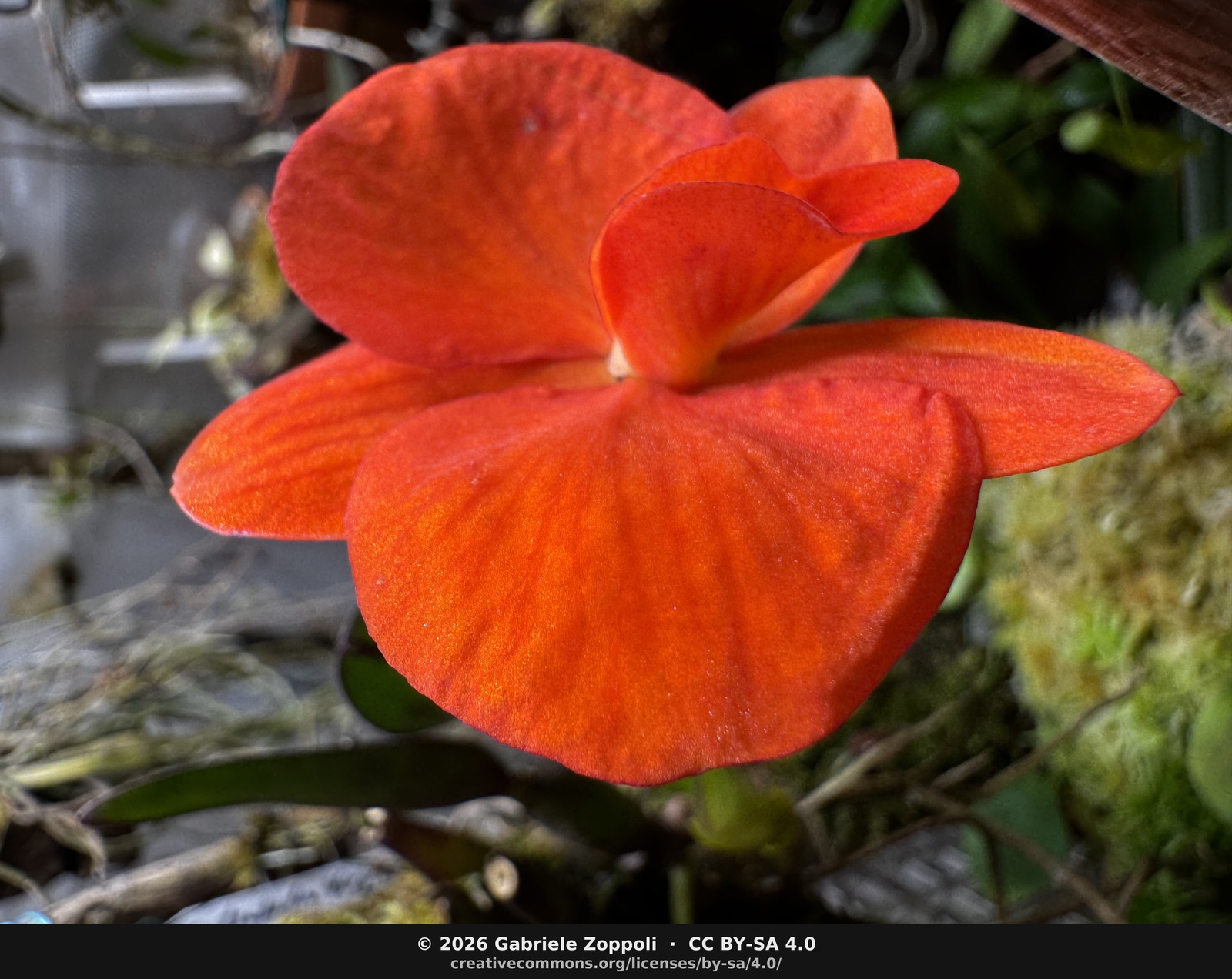
.)](https://highlandcloudforest.com/img/highland/interior/interior_2026-04-20_coccinea-bloom.jpg)
How it got here
Early 2023, from Christian and Claudia Klein at Carnivors & More. The label read Utricularia quelchii, Ilu Tepui, and the Ilu tag was half the reason I ordered — tepui endemics with a clear cliff-of-origin are what draw me to the genus. It arrived looking exactly like what you’d expect from a bladderwort that evolved on a Guayana-highland summit: a handful of tear-drop leaves — already a couple of centimetres long including the petiole, which is large by bladderwort standards — a few white traps buried in live moss, and an attitude of we’ll see. That attitude held for three years. The plant never died, the leaves grew slowly but steadily, and by last year the stolons had threaded through the entire pot.
The setup (in case it’s reproducible)
- Container: terracotta, perforated, 10 cm diameter.
- Substrate: live Sphagnum only. The moss has so completely occupied and overflowed the pot that it reads more as a kokedama than as a potted plant.
- Position: hanging on the back wall of the highland cabinet, mid-height, with nothing above it on the wall. The light is direct but not the brightest corner — the Heliamphora sit about 30 cm from the LED array, that’s the full-sun tier; the quelchii is a step below. I’ll add the actual lux once I can get the meter in.
- Watering: none from me. The pot sits directly under a mister nozzle and the live sphagnum stays evenly damp on its own. Foliar Akerne Orchid Mix at half a teaspoon per three litres, a couple of times a month.
The detail I find most interesting: the flower spike emerged not from the wetter body of the pot but from the driest 2 cm that sit against the cabinet wall. Whatever cue a quelchii needs to bloom, it may not be continuous saturation.
Why I care
Deep-red flowers are rare in Utricularia and essentially a Pantepui specialty: U. quelchii and U. campbelliana sit alone at that end of the colour range within the section Orchidioides, both confined to the summit-mat bogs of Roraima, Ilu-Tramen, Wei, Chimantá, and neighbouring table-mountains of the Venezuelan Guayana Highlands (Taylor, 1989). The other red one I have is U. campbelliana, also Ilu-sourced, also in live sphagnum, slow as hell for three years, also not yet in flower. The flower colour alone makes quelchii a collector’s plant; the tear-drop leaves — large for the genus, and sometimes reddish themselves — are the second hook.
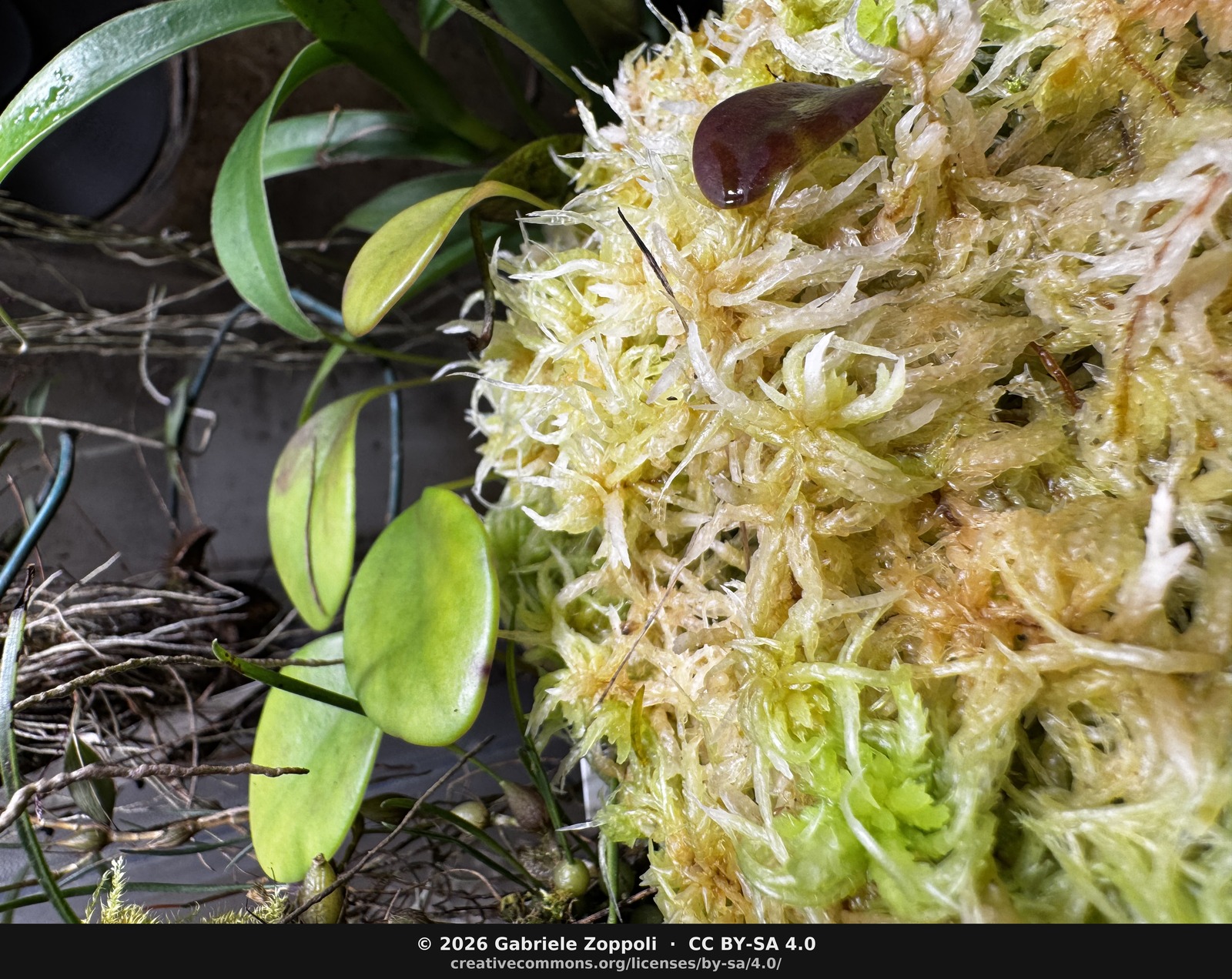
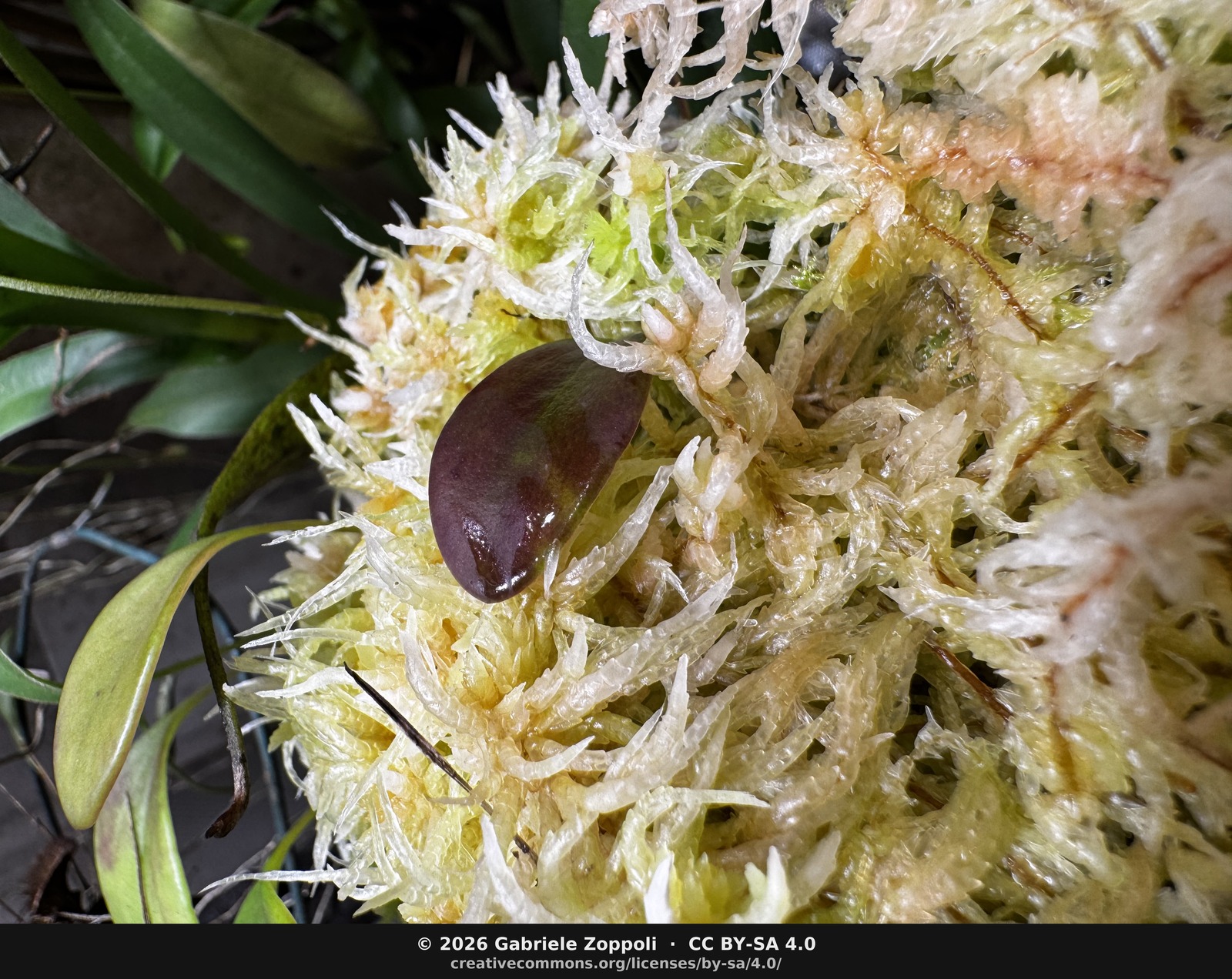
I hadn’t expected a bloom. The plant arrived with three or four leaves and now has many; the rosette slowly but steadily kept growing. But growth that stays pure vegetative starts to look like a contract — I’ll live here, I’ll take up space, I won’t flower. Three years of that can be easy to accept. Turns out the plant had been setting up all along.
What comes next
I’ll update this post as the spike opens and once I can get a lux meter into that position to replace the eyeball estimate.
Update — 2026-05-07: the first flower is open
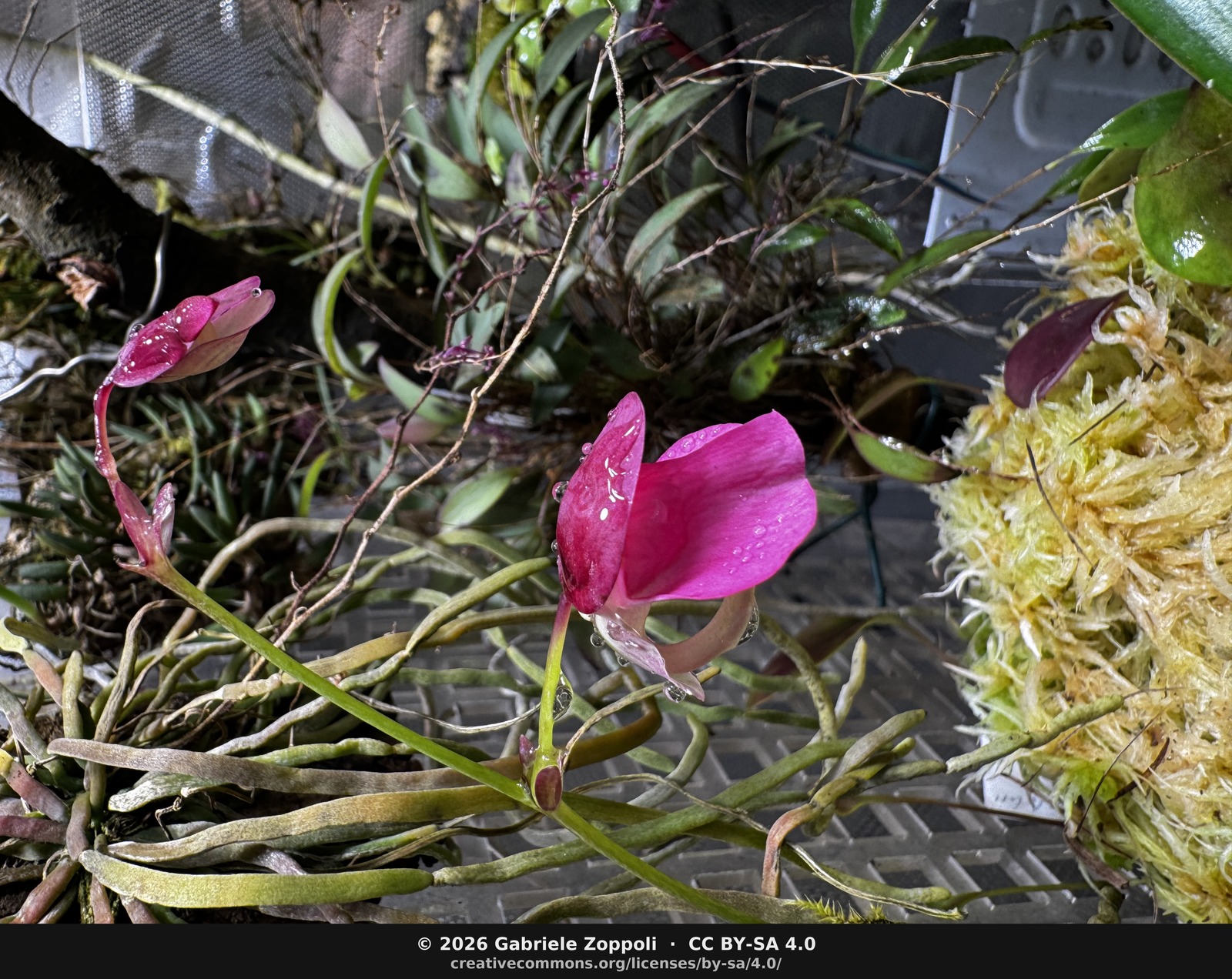
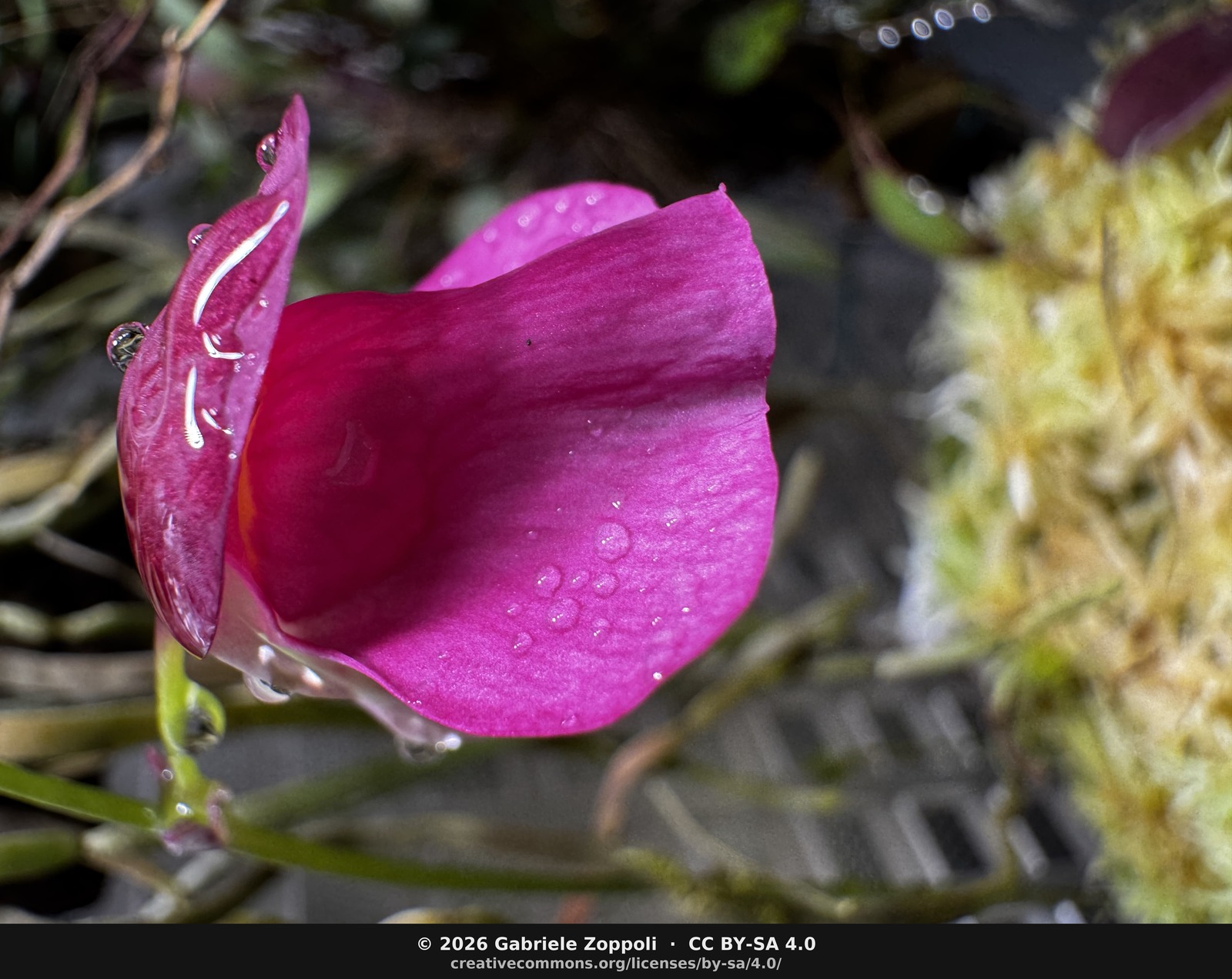
Seventeen days from the first photos, the larger bud has opened and the section Orchidioides gestalt is unmistakable: a hooded galea above, a yellow-cream throat with two red callus blotches inside, and a broad lower lip that pales from the magenta of the hood to white-pink at the edges. The second bud is still closed, slightly below.
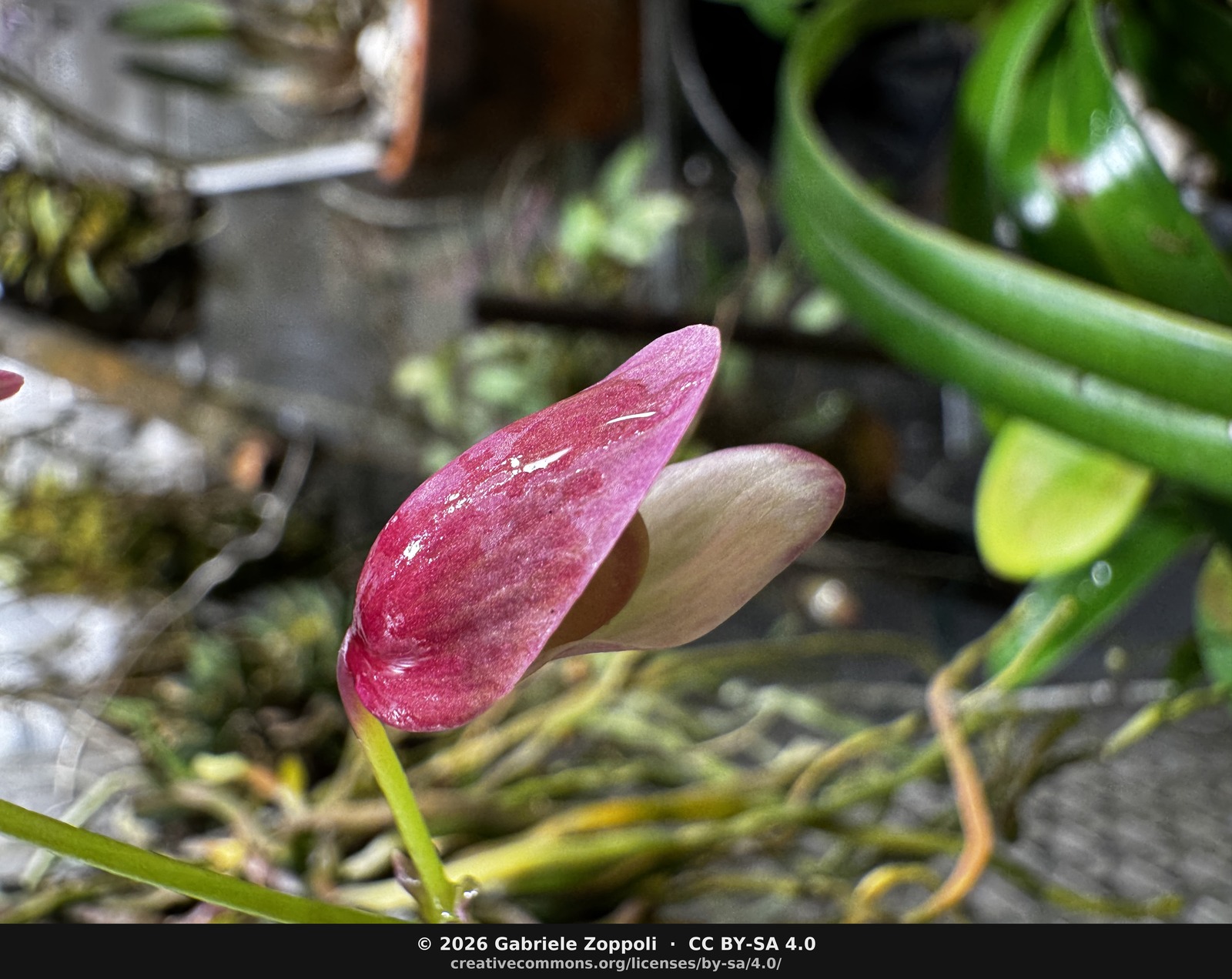
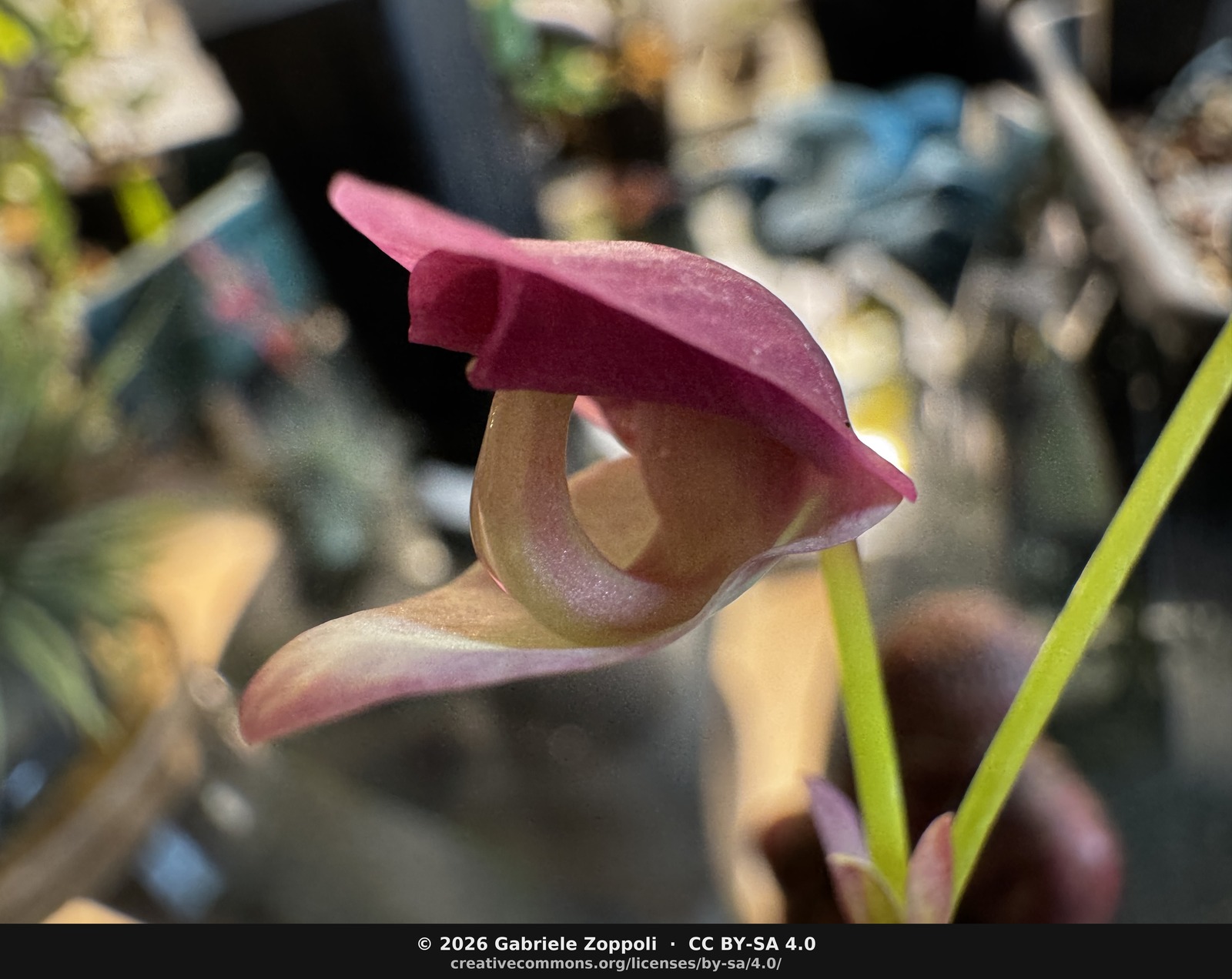
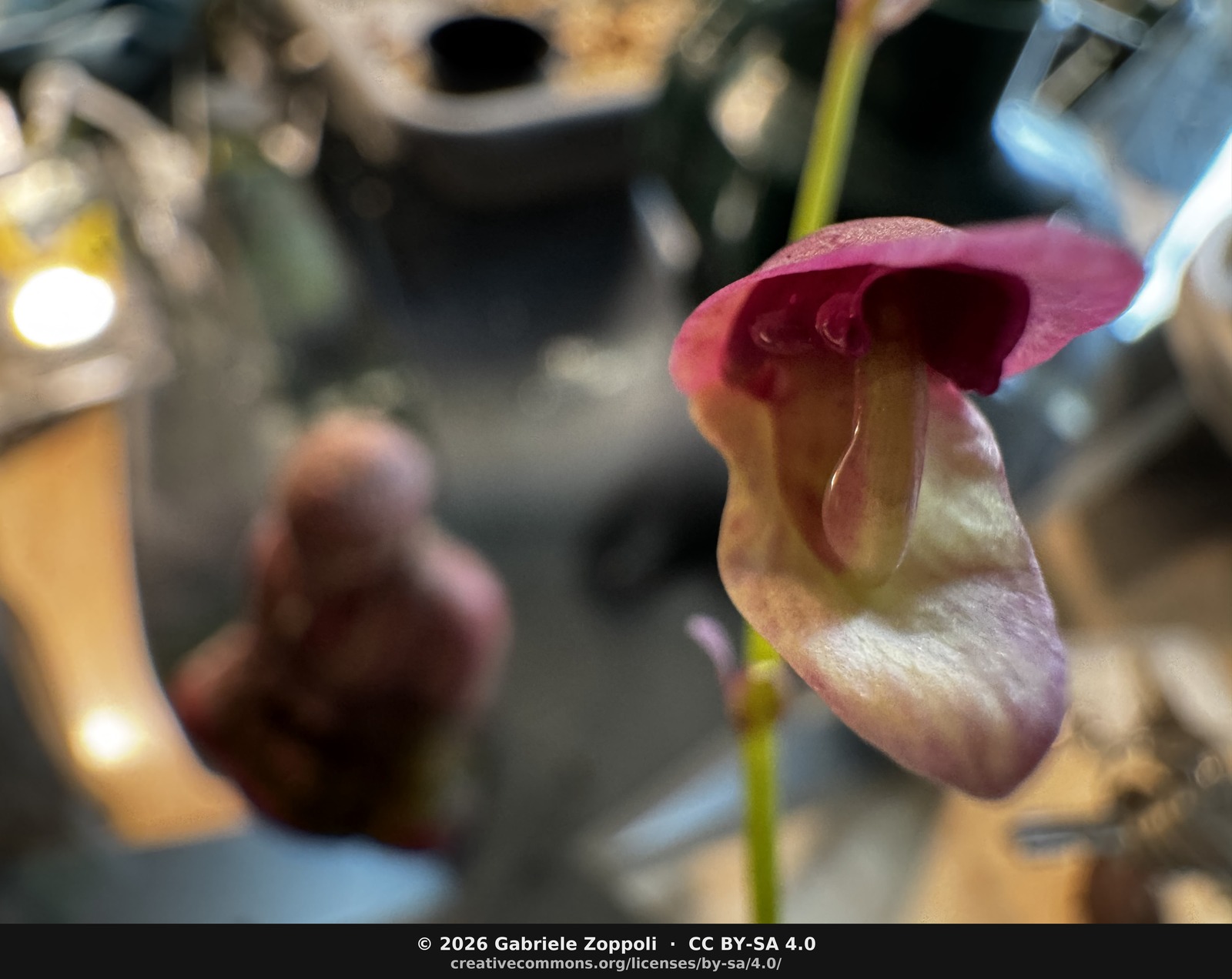
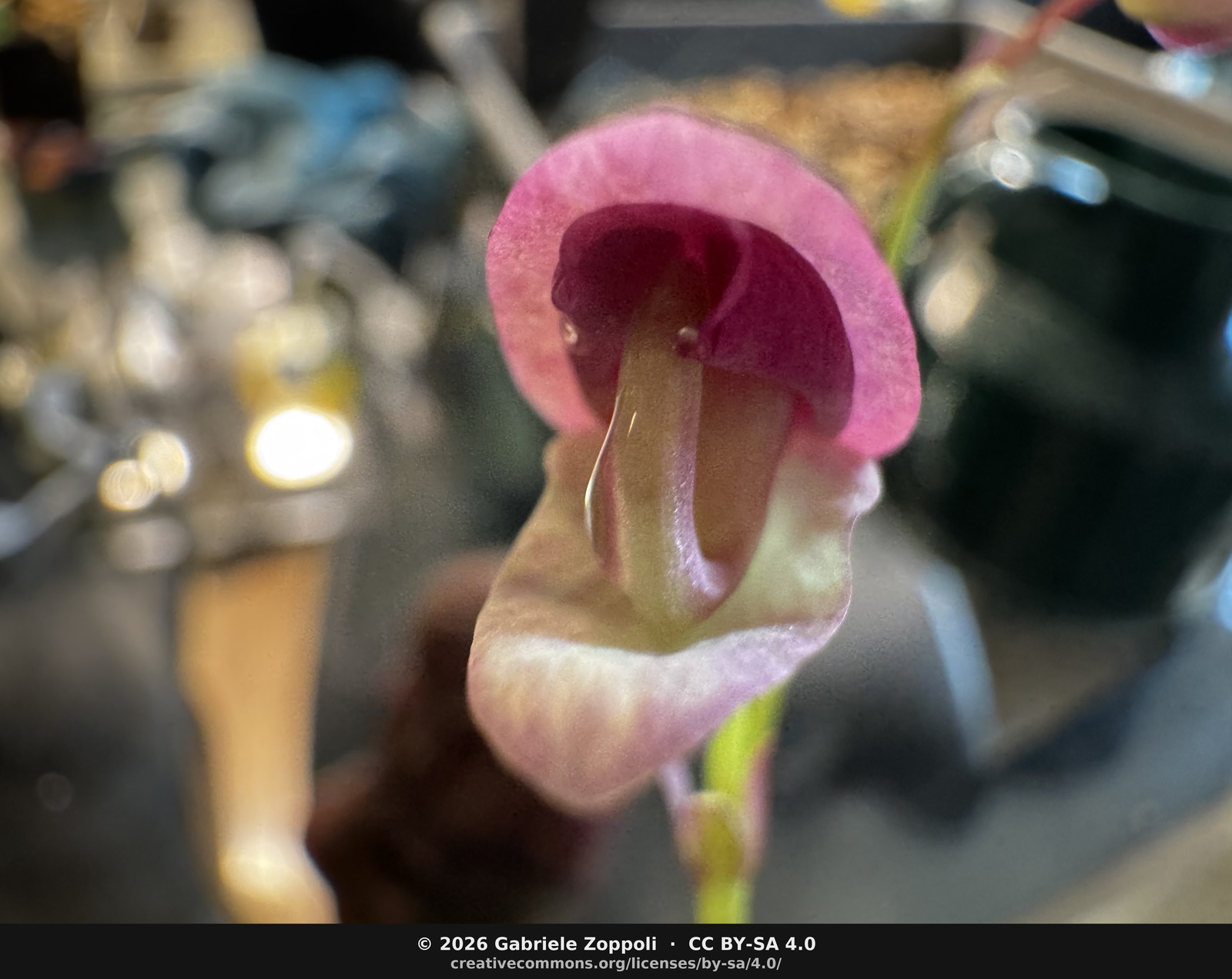
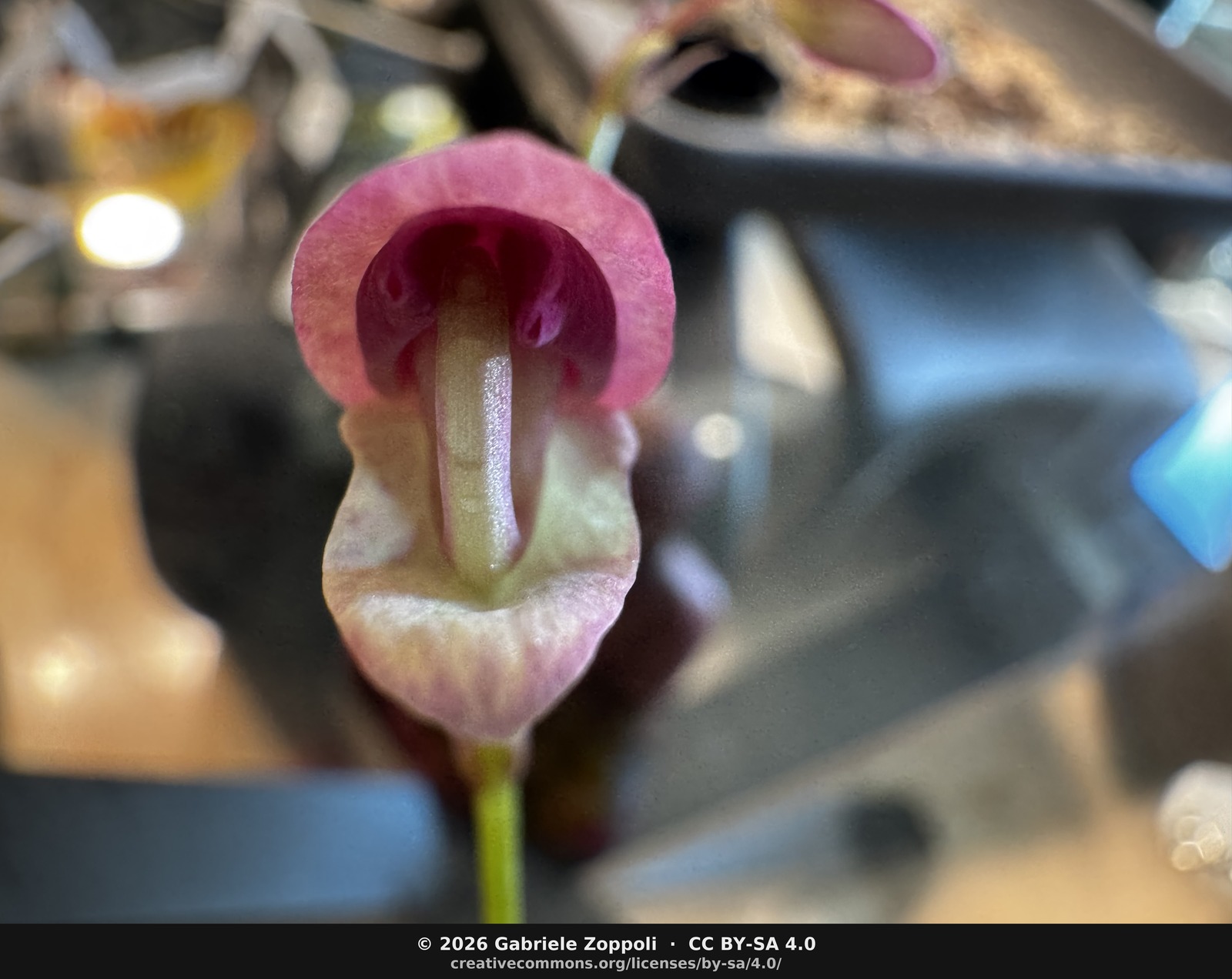
The plant is still in the same hanging position, same sphagnum kokedama, same mister nozzle overhead. Lux meter still pending. The colour is closer to cool magenta than the deep blood-red the photographs in Taylor (1989) hint at — possibly clone variation, possibly light-driven. I’ll see whether the second bud opens darker or paler than the first.
Update — 2026-05-11: both flowers open
Day 21. The second bud has caught up — both flowers are now face-out on the same scape. Colour is uniform across both: same magenta hood, same yellow-cream throat, same pink lower lip. No shift toward the deep red of the Roraima phenotype on the second flower; this clone is reliably Ilu pink.
References
- Taylor, P. (1989). The Genus Utricularia — A Taxonomic Monograph. Kew Bulletin Additional Series XIV. Royal Botanic Gardens, Kew. The definitive treatment of the genus; the key to sect. Orchidioides (pp. 42–59) is where the quelchii/campbelliana characters live.
- Fleischmann, A. (2012). Monograph of the genus Genlisea. Redfern Natural History Productions. Not about Utricularia per se, but the accompanying material on Pantepui biogeography is useful context for the highland-epiphytic bladderworts.
- Huber, O. (1995). Geographical and physical features of the Pantepui, in: Berry, P.E., Holst, B.K., Yatskievych, K. (eds.), Flora of the Venezuelan Guayana, Vol. 1. St. Louis: Missouri Botanical Garden Press. On the tepui summit habitat the section Orchidioides species evolved in.
Comments
Thoughts, corrections, trade offers welcome. Comments live on GitHub Discussions; sign in with a GitHub account to post.