Deep clean: four years in, two of them with mold building
Four years online — the last two with mold quietly accumulating in a stagnant corner — and the highland cabinet finally got its first deep clean. Triggered by what I'd taken for botrytis on a Dracula and traced back to a single fan that had silently disconnected itself months ago.
A Dracula pholeodytes bud was the first symptom — a flat grey halo I’d taken for botrytis around what should have been an opening flower, on a plant that hadn’t shown trouble before. A week of changing nothing didn’t fix it. So I emptied the cabinet.
Tracing the cause
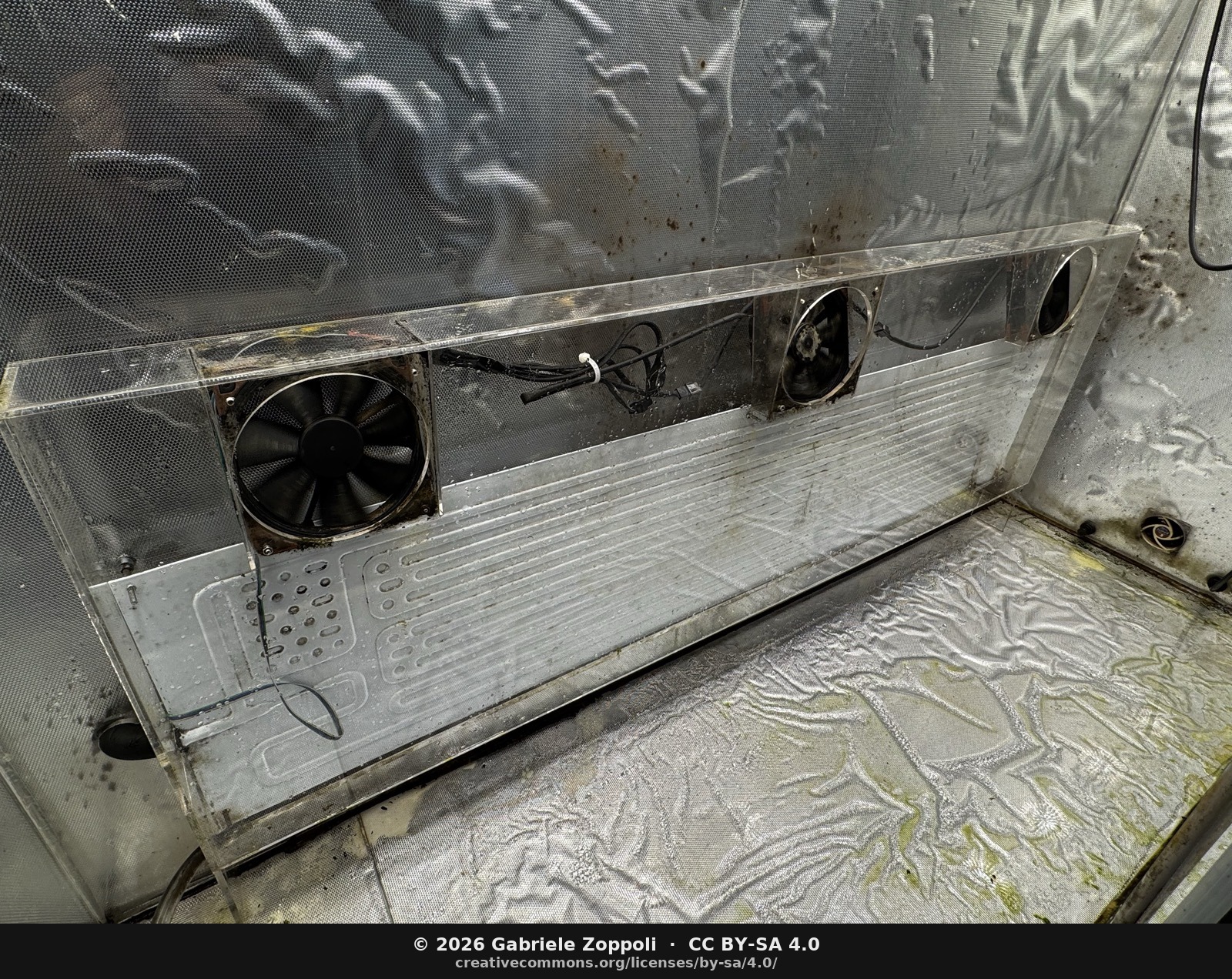
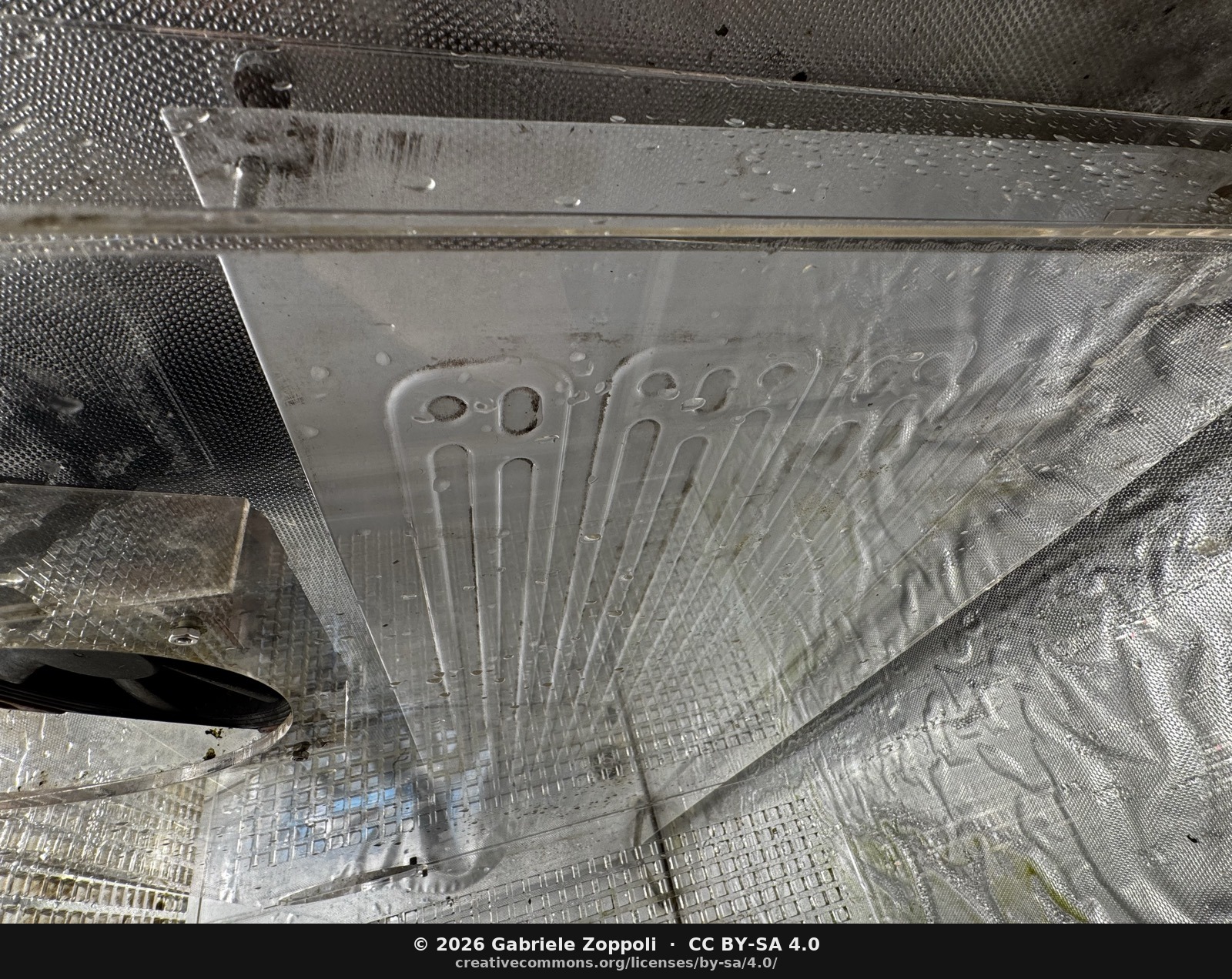
The freezer-evaporator behind the back wall has three small PWM fans pulling air across the cold-plate. Two of them sounded right. The third — back-left — was silent. Pulling the polycarbonate cover plate off, the cable was hanging loose: a faulty crimp had let the connector slip off the pin months ago. The other two fans were enough to keep the cabinet on temperature, so the alarms never tripped; the back-left corner just stopped breathing.
Pulling everything out
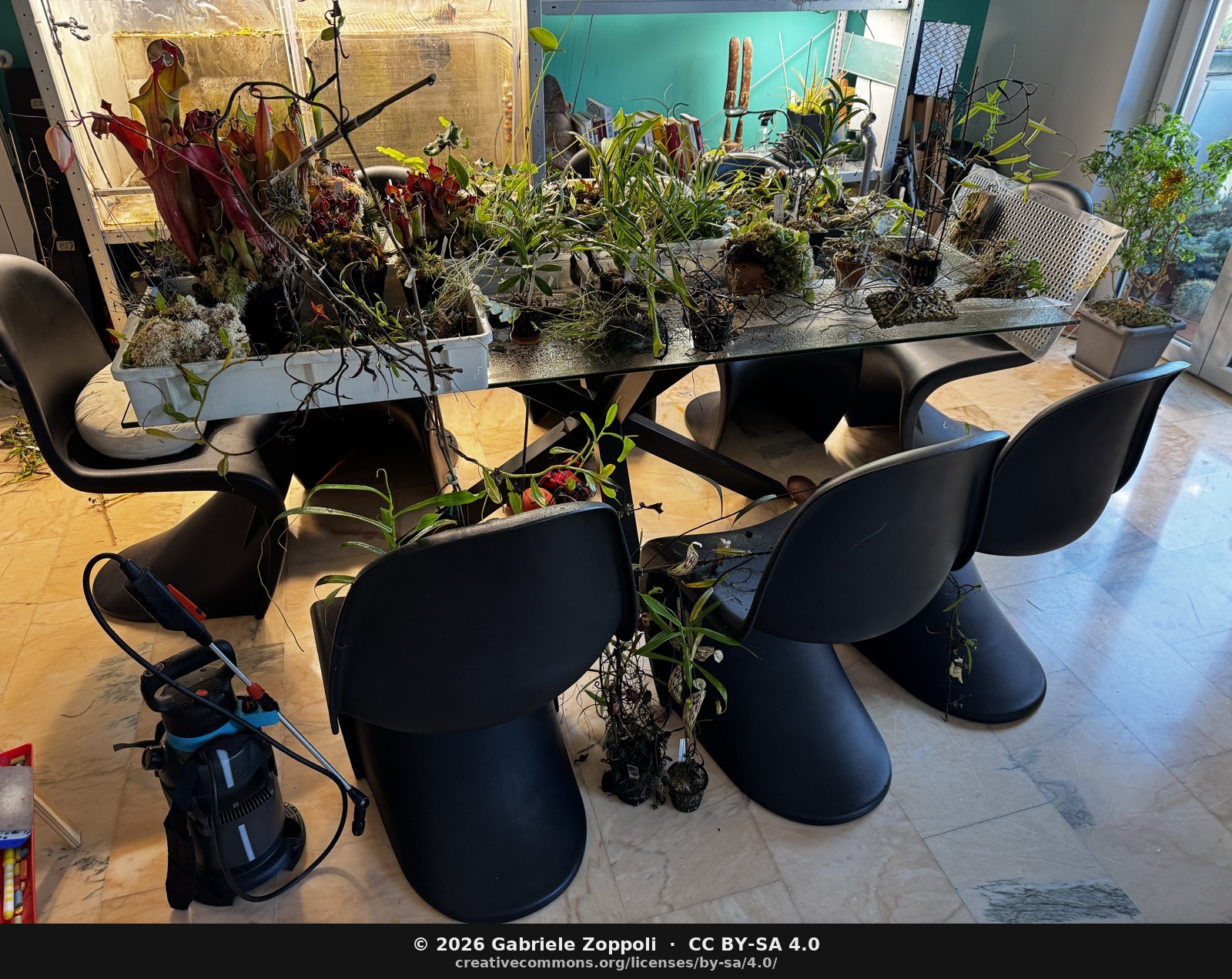
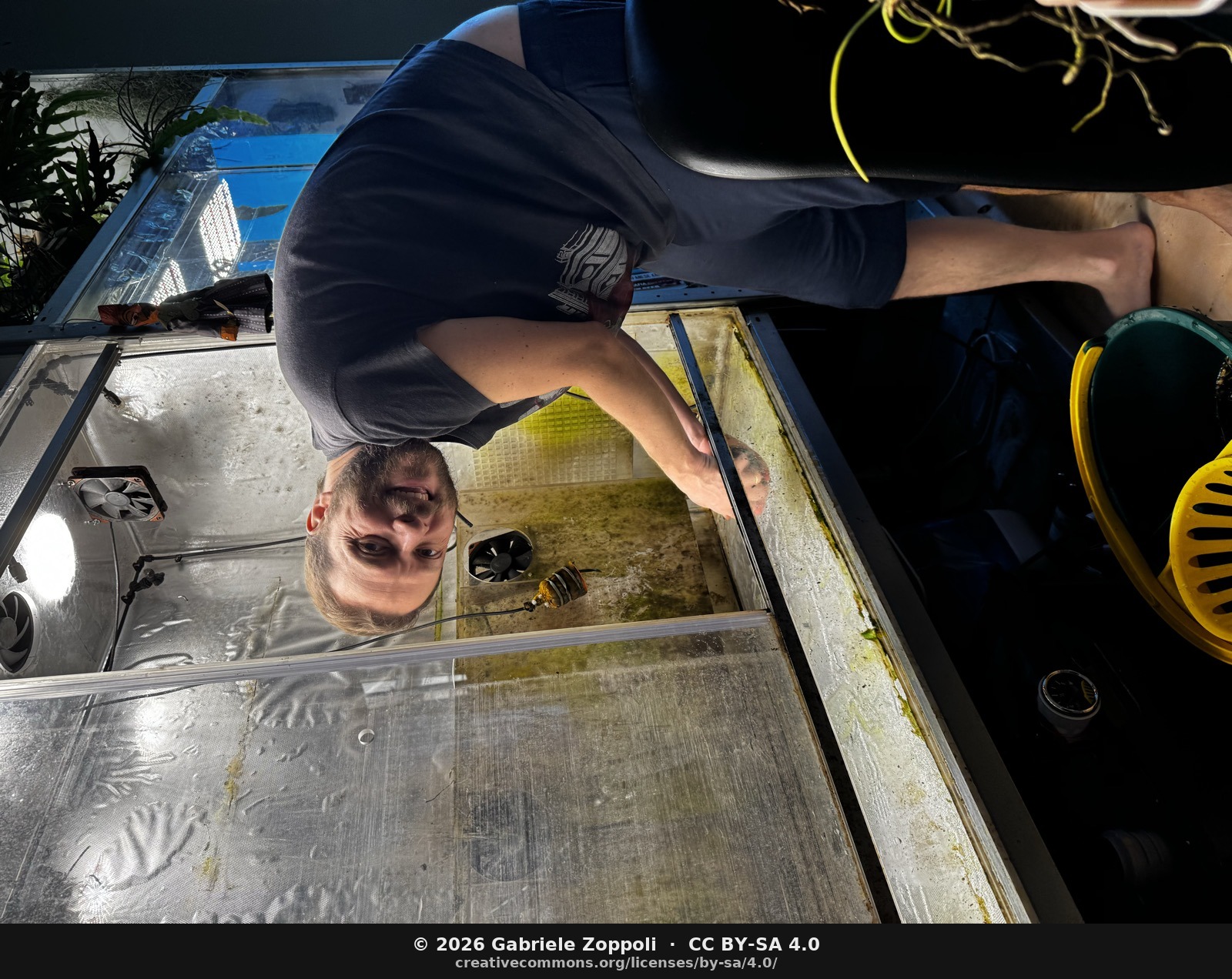
For the first time since it went online four years ago, the cabinet got fully emptied. Around 70 plants — Heliamphora, Sarracenia, Nepenthes, the dense pleurothallid layer, the hanging Dracula and Restrepia — out onto the dining table. The pump sprayer in the foreground holds the working solution: Physan-20 at 10 mL per 5 L of water, which is what I use for everything cabinet-related. Walls, polycarbonate, the steel evaporator plate, all sprayed and scrubbed.
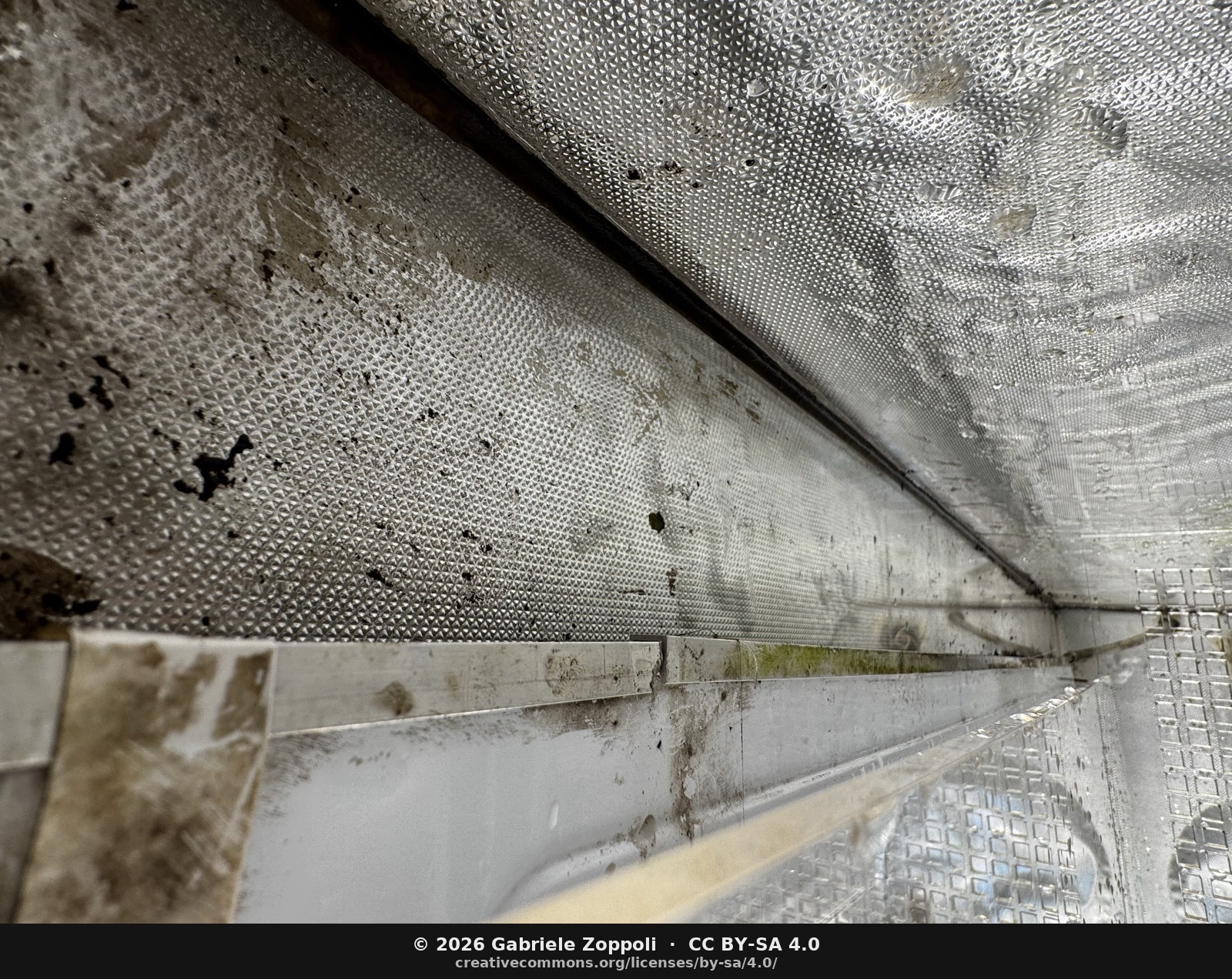
Most of the black on the walls actually came off with just water and a sponge — a saprophyte, the kind that lives on dust and condensate in a stagnant corner, not something that infects leaves. The Physan was belt-and-braces; the real fix is getting airflow back to that corner.
Recrimping the dead fan
With the cabinet bare it took about ten minutes to swap the cable. New crimp, into a known-good lead — the fan span up immediately, ruling out the motor. While the work was open I redid the crimps on all three connectors, on the principle that whatever weakened one will probably weaken the others.
Drainage and plant work
The canalina — the condensate channel below the evaporator — is a thin aluminum fold suspended on fishing line at a precise 5° tilt toward the drainage pipe. Water from the back of the cold-plate runs down its length and drains by gravity through a PVC pipe to a tank under the cabinet. With everything out, it got scrubbed and the fishing line re-tensioned.
While the plants were on the table, I repotted all the Nepenthes — N. glabrata, pitopangii, tenuis, inermis — and tied each climber up a thin wooden orchid stake with plastic zip ties. They’ve been getting tall enough to need it. The hanging Dracula and Restrepia moved into less stagnant positions; the corner that lost its fan no longer holds a hanger.
Cabinet back online
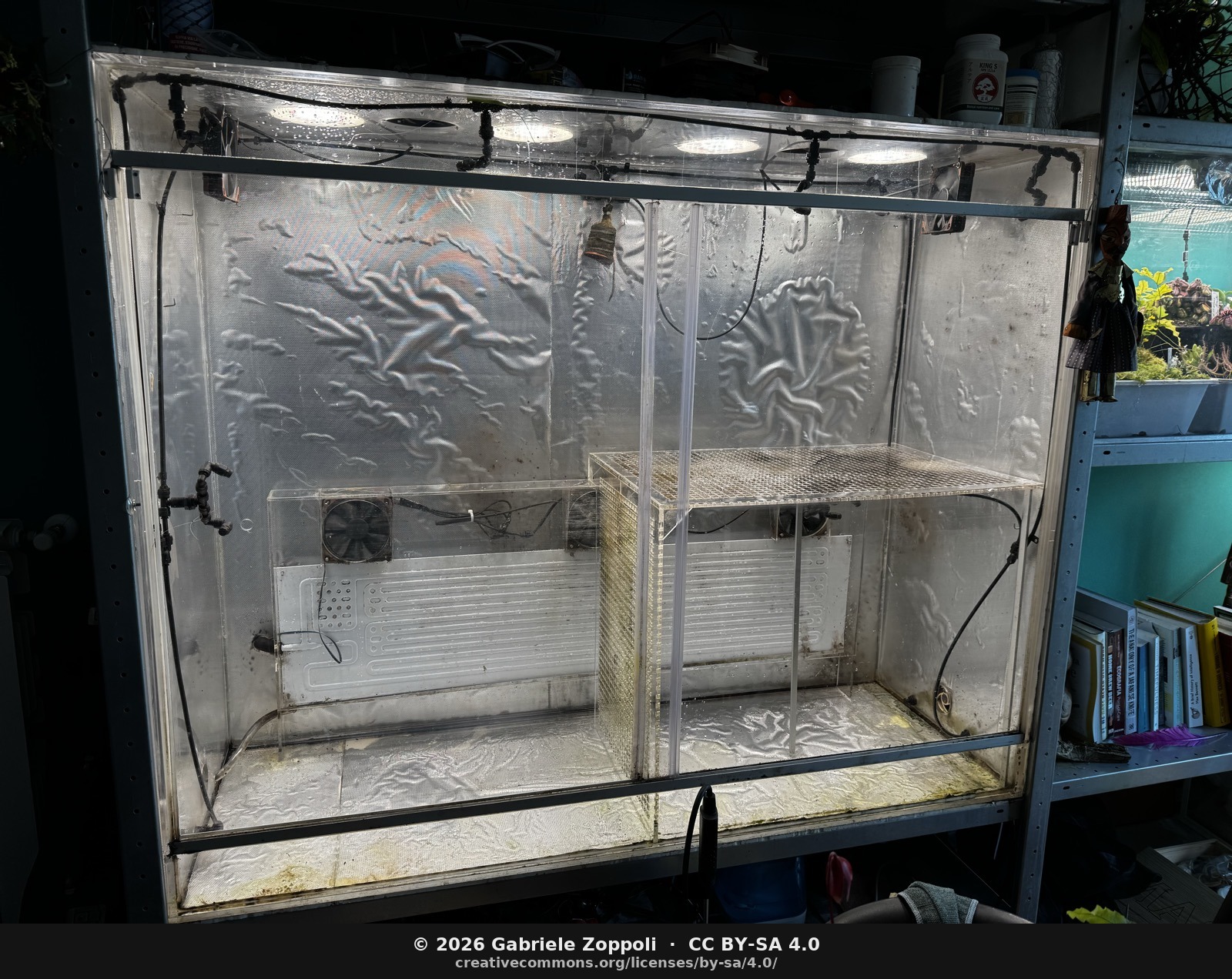
The polycarbonate shelf is back in — that’s the tier that lets the Heliamphora sit at full intensity above the pleurothallids below. All three fans are turning. The plants went back to their positions, with the high-airflow corners getting the species that had been suffering the most.
(Filed on the terrarium photo timeline under May 2026.)
Comments
Thoughts, corrections, trade offers welcome. Comments live on GitHub Discussions; sign in with a GitHub account to post.